PEOPLE CONTACT WRITING
 

Home

What is Instructional Design?


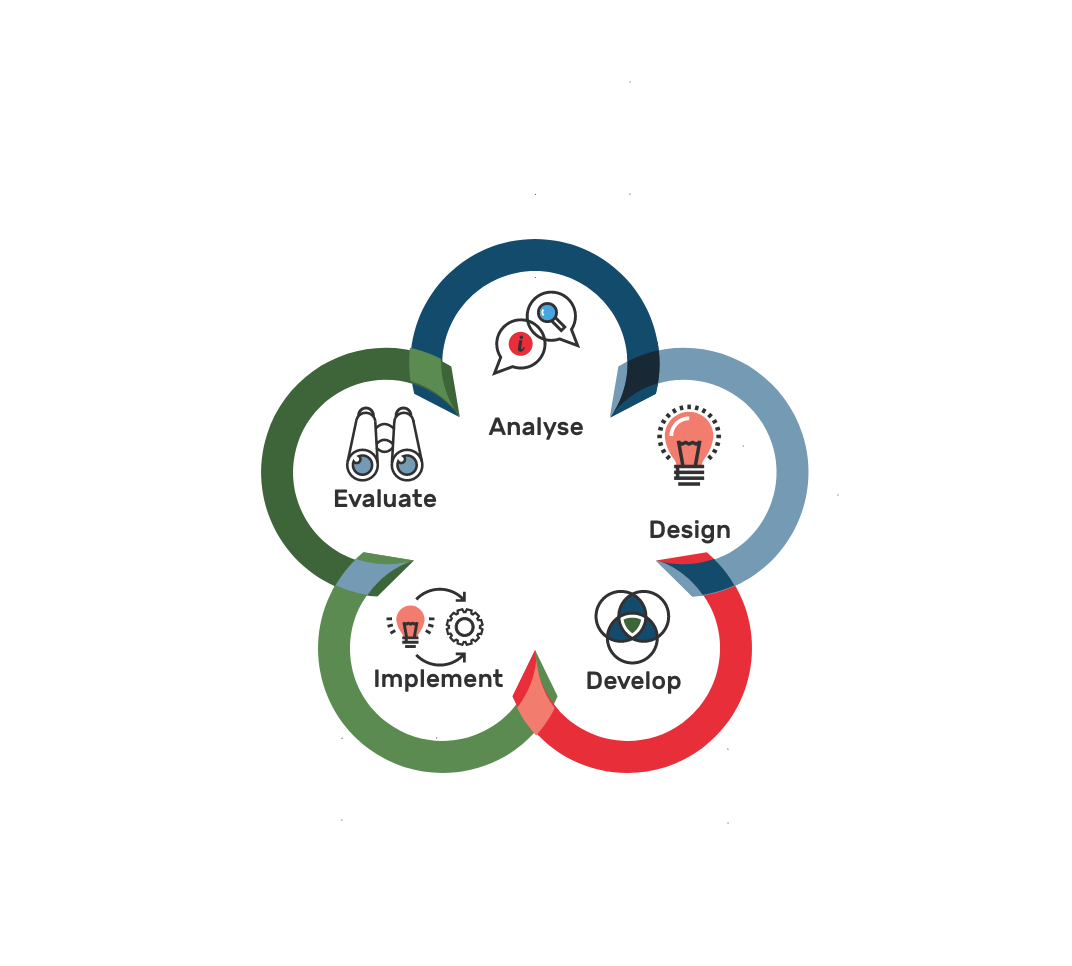
Instructional Design is the process of using our knowledge of "How People Learn" to develop instructional strategies that meet the needs of the learners and the desired learning outcomes.


This is an adaptation and extension of a model developed by The Learning Federation.

Research has shown that particular ways of delivering instructions are more effective than others. Different kinds of learning goals require different approaches to instruction. The instructional designer can determine the best instructional conditions or methods to deliver learning outcomes. The Instructional designer develops instructional strategies that are tailored to the learning objectives and the needs of the learners.

The aim of instructional design is to make the instructions effective, efficient, appealing and cost-effective. The instructional designer uses a variety of interactive media to improve learning and address learning objectives. Traditional face-to-face teaching methods can be enhanced by, or even replaced by innovative e-learning methods. The instructional designer is the expert in finding the "right" technology to support "good" pedagogy.

The Information Age is making new demands on us all. Education must find ways to face these new challenges. We can no longer see learners as empty vessels that can be filled with information. The information now resides out there, distributed across a vast network and shared between all people. The challenge now is to help people to use this information safely, wisely and productively as they adapt to a rapidly changing world. We need to prepare "students to learn work and live successfully in a knowledge-based, global society" (Newhouse, 2002). The Instructional Designer is there to facilitate learning in this new epoch, The Knowledge Age.


Learning Science


Learning Science was heralded by the book "How People Learn" edited by Bransford, Brown and Cocking 2000, published by the United States National Research Council. It outlined the following basic facts about learning:

  • The importance of deeper conceptual understanding: focus the student on understanding rather than memorisation and routine procedures to follow.
  • Focusing on learning in addition to teaching: engage students in active participation in their own learning.
  • Creating learning environments: learning scientists have identified the key features of learning environments which help students learn deeper conceptual understanding.
  • The importance of building on a learner's prior knowledge: provide an environment that engages the students prior knowledge then builds upon this.
  • The importance of reflection: engage students in activities that help them to reflect on their own learning and understanding.

The Cambridge Handbook of the Learning Sciences, edited by R.K. Sawyer was published in 2006. This book describes just how these principles can be applied to the design of learning environments particularly taking advantage of new computer technology.

First Principles of Instruction

  1. Learning is promoted when learners are engaged in solving real-world problems.
  2. Learning is promoted when existing knowledge is activated as a foundation for new knowledge.
  3. Learning is promoted when new knowledge is demonstrated to the learner.
  4. Learning is promoted when new knowledge is applied by the learner.
  5. Learning is promoted when new knowledge is integrated into the learner’s world.

    (M. David Merrill, 2002)

The Southwest Educational Development Laboratory (SEDL) gives an excellent account of Constructivism.

The American Psychological Association has developed the Learner-centered Principles. The most important principle is to create a positive climate and positive relationships.

What do Instructional Designers do?


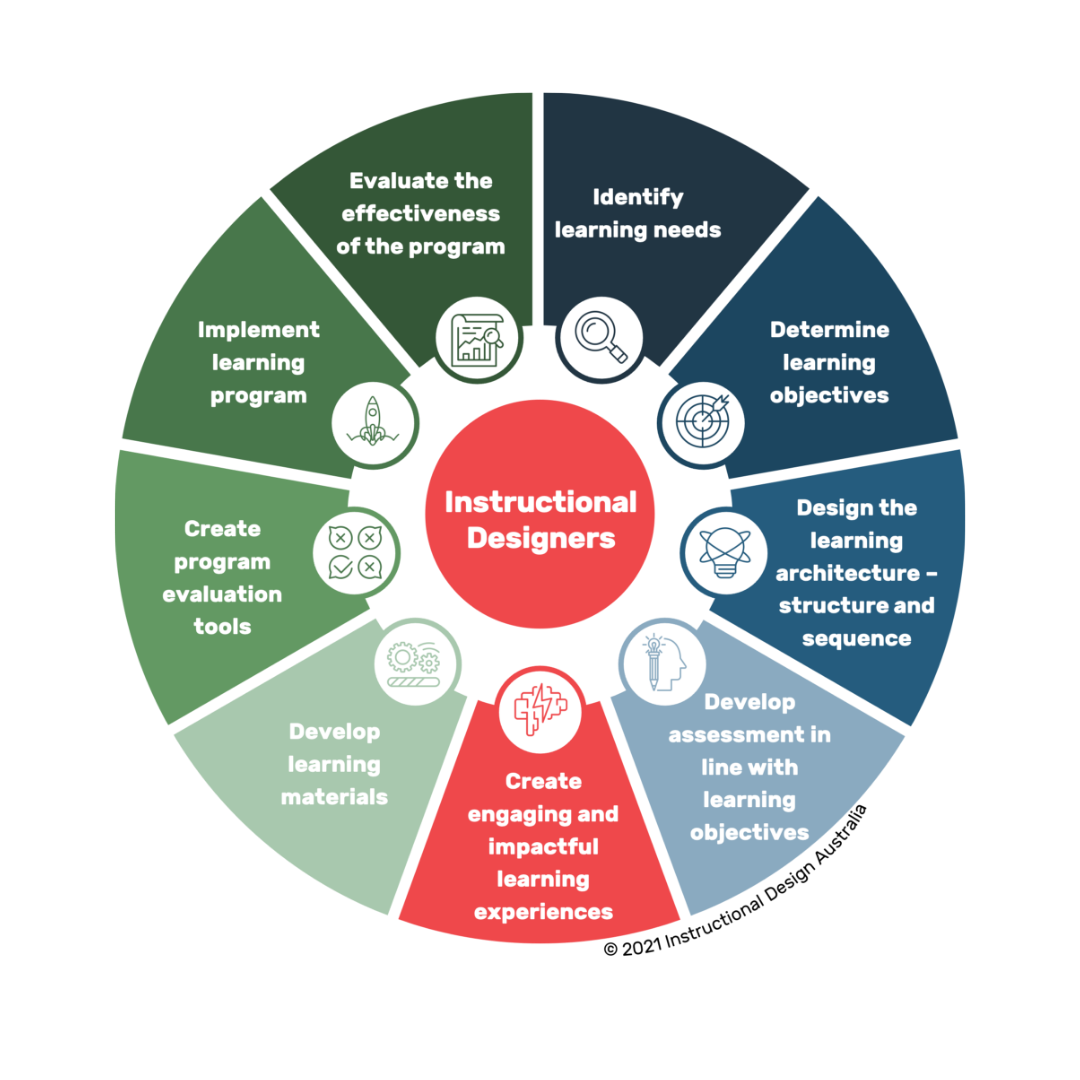
An instructional designer:

  • Analyses learning needs and then systematically develops instruction.
  • Studies instructional theories, tools and resources to develop methods to facilitate learning.
  • Relies on current research in educational psychology, educational theory and systems analysis to ensure the most suitable teaching methods are used.
  • Bases their decisions on proven instructional design methods.
  • Uses pedagogically sound teaching methods and the latest technology to design effective learning products.
  • Has a deep knowledge of the various strategies and technologies that can be applied to course design.
  • Works with the Subject Matter Expert (SME) or "content specialist" to plan the structure of a course to achieve educational objectives.
  • Creates:
    • online and distributed learning courses,
    • tutorials,
    • workshops,
    • training manuals,
    • seminars or
    • computer-based training programs
  • Plans and implements the most effective training strategies.
  • Integrates feedback, student support, assessment and course evaluation into the training program.
  • Works with the multimedia designers and programmers to ensure a course will facilitate learning and deliver the objectives in the most effective way.
  • Evaluates the effectiveness of the learning product.

    Don Clarke presents a review of 5 theories of Instructional Design.


Page first uploaded onto the Internet in August 2006. Page Last Updated: March 5, 2007

© Annette Culley


Home| The Author | Contact | Academic Writing