VACCHO and Balit Durn Durn Centre eLearning design system case study
ow we built a culturally grounded eLearning design system for VACCHO and the Balit Durn Durn Centre, so their team can build consistent, accessible learning independently.
The client
VACCHO, the Victorian Aboriginal Community Controlled Health Organisation, is the peak representative body for the health and wellbeing of Aboriginal and Torres Strait Islander people in Victoria. Founded in 1996, VACCHO supports 34 member organisations to deliver culturally safe health and social services across the state.
The Balit Durn Durn Centre was launched within VACCHO in May 2022 as a Centre of Excellence for Aboriginal Social and Emotional Wellbeing. Established as a key outcome of the Royal Commission into Victoria’s Mental Health System, the Centre leads workforce training, builds clinical effectiveness, and drives innovation in social and emotional wellbeing practice across the sector.
The challenge
VACCHO and the Balit Durn Durn Centre have a significant and growing workforce development mandate, building the capability of practitioners, community workers, and health professionals to deliver culturally safe, evidence-based support across Victoria. eLearning is central to how they deliver that training at scale.
But building eLearning that genuinely reflects Aboriginal and Torres Strait Islander values and cultural safety, across two distinct brands, requires more than an Articulate licence. Without a consistent design system, every developer starts from scratch. Branding drifts. Quality varies. Cultural safety principles get applied inconsistently. VACCHO needed a complete design system their own team could own, use confidently, and build from.
Our approach
We designed and built a comprehensive eLearning design system covering everything VACCHO’s internal developers need to produce professional, culturally grounded, on-brand learning without starting from a blank canvas.
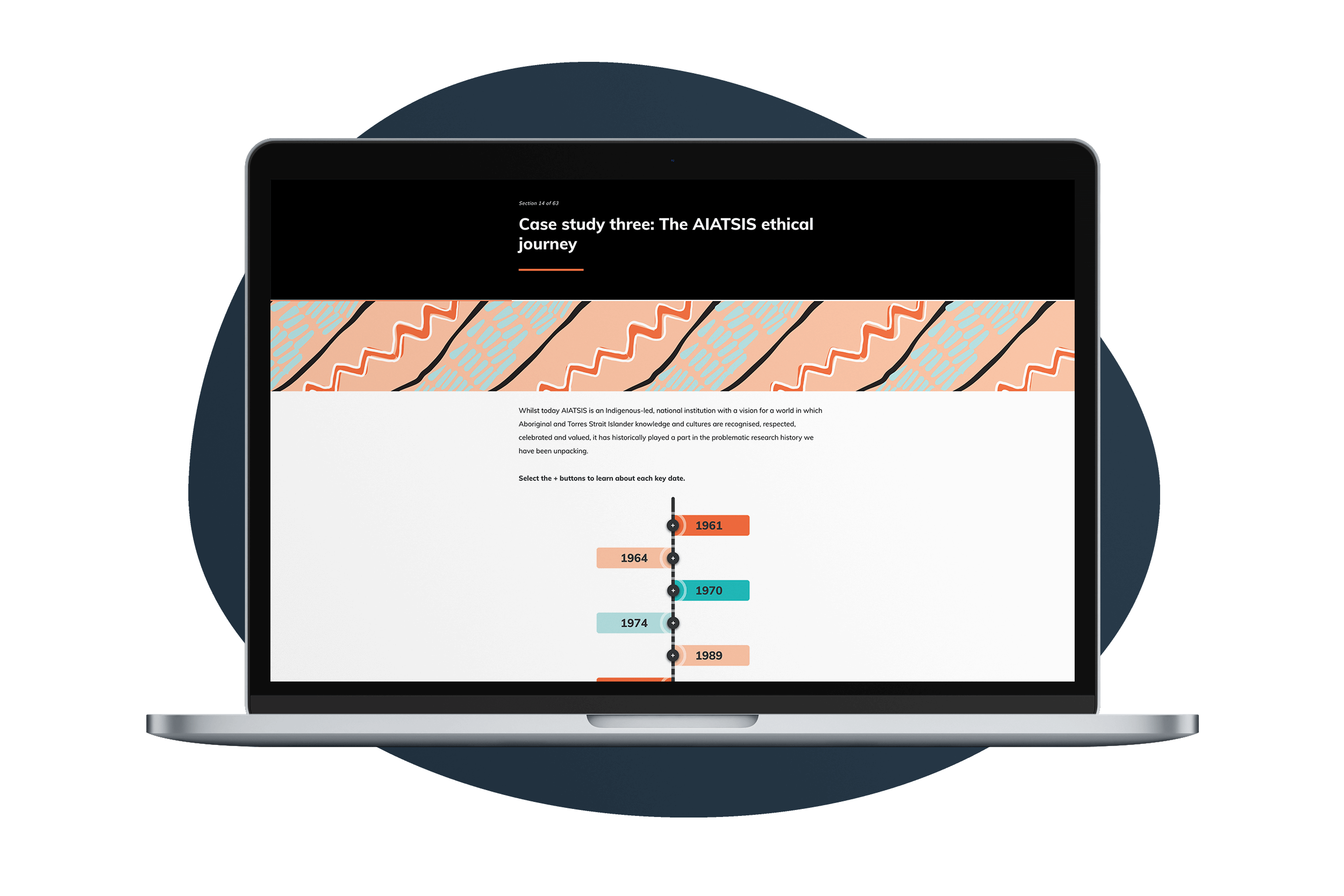
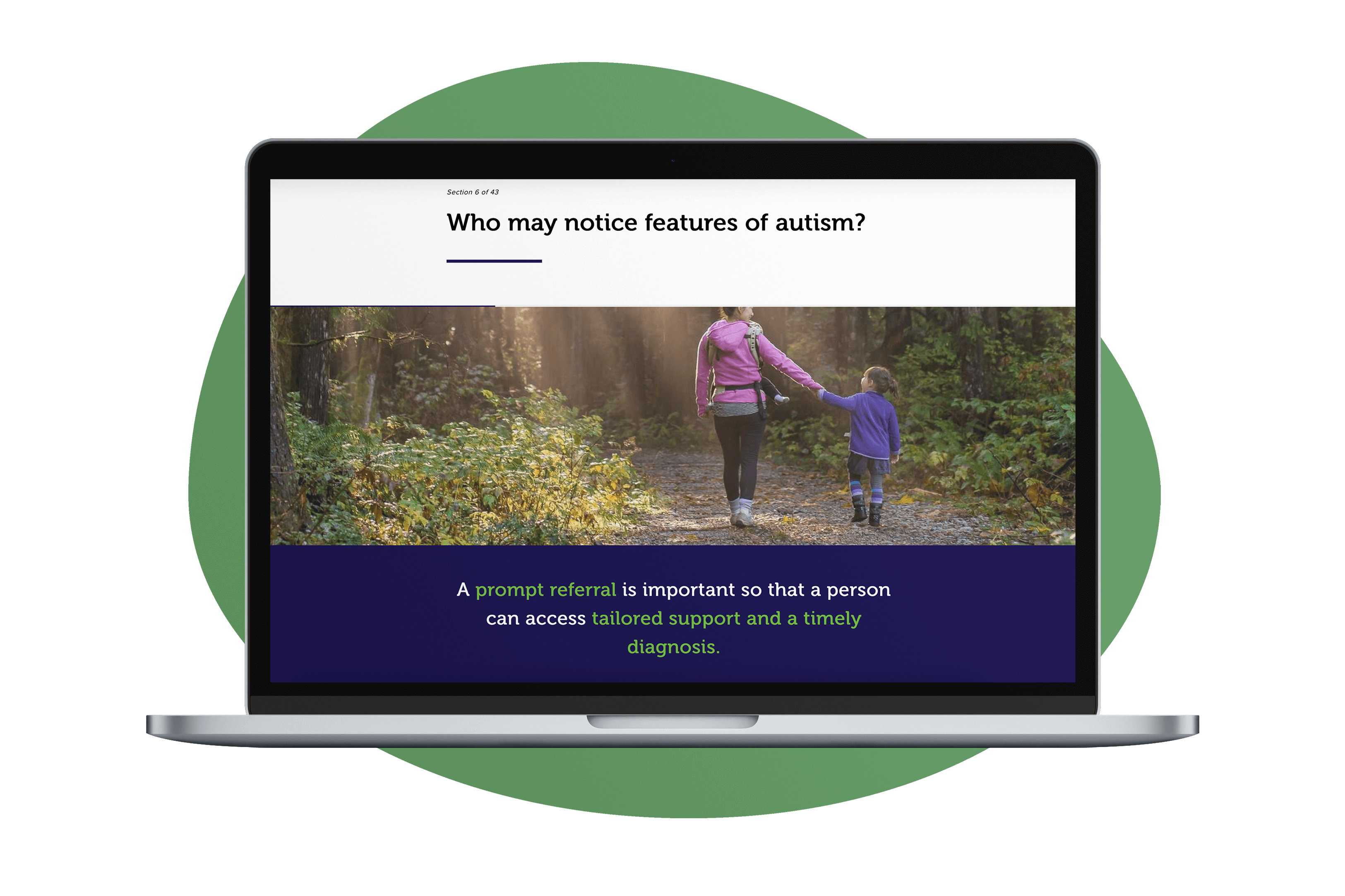
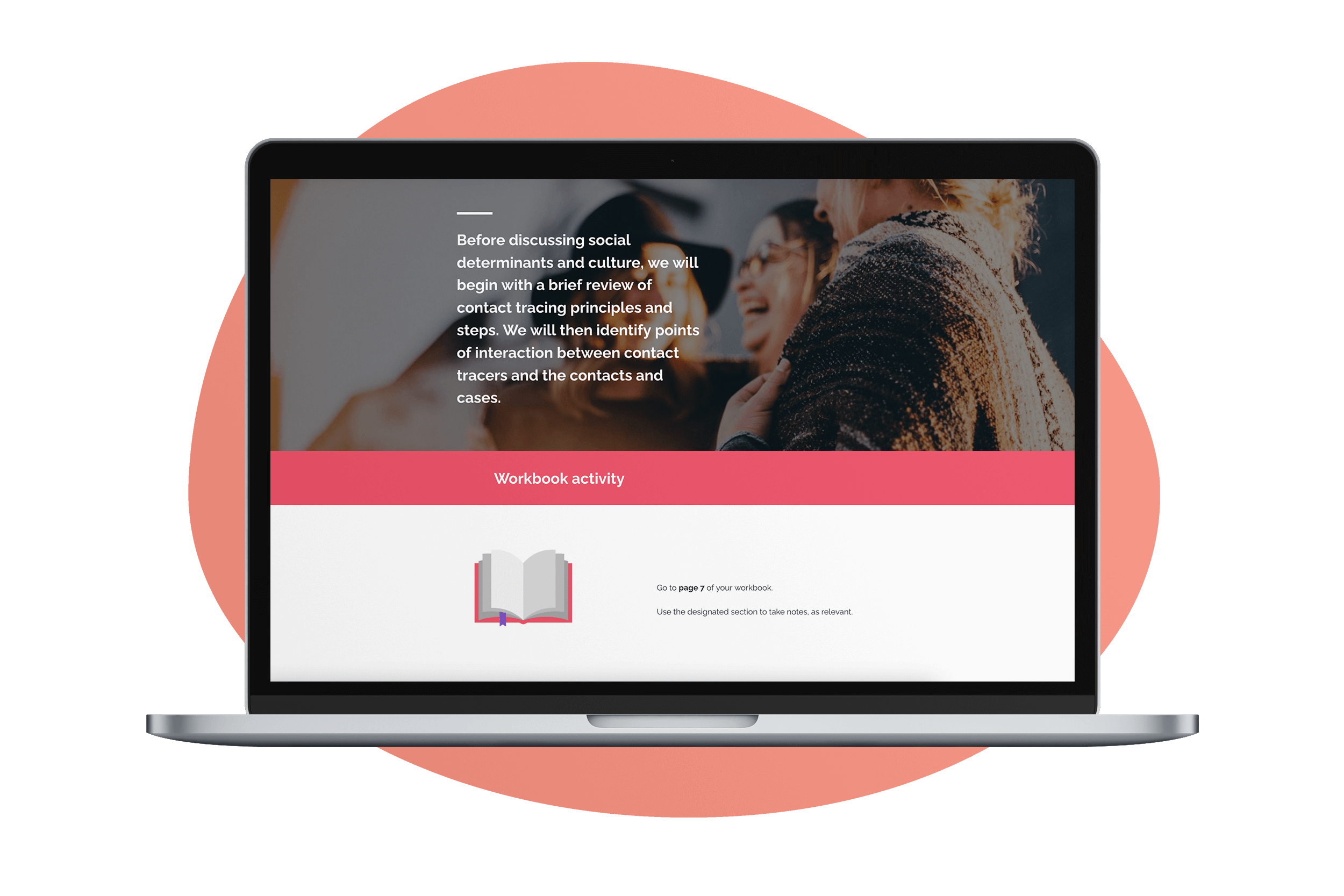
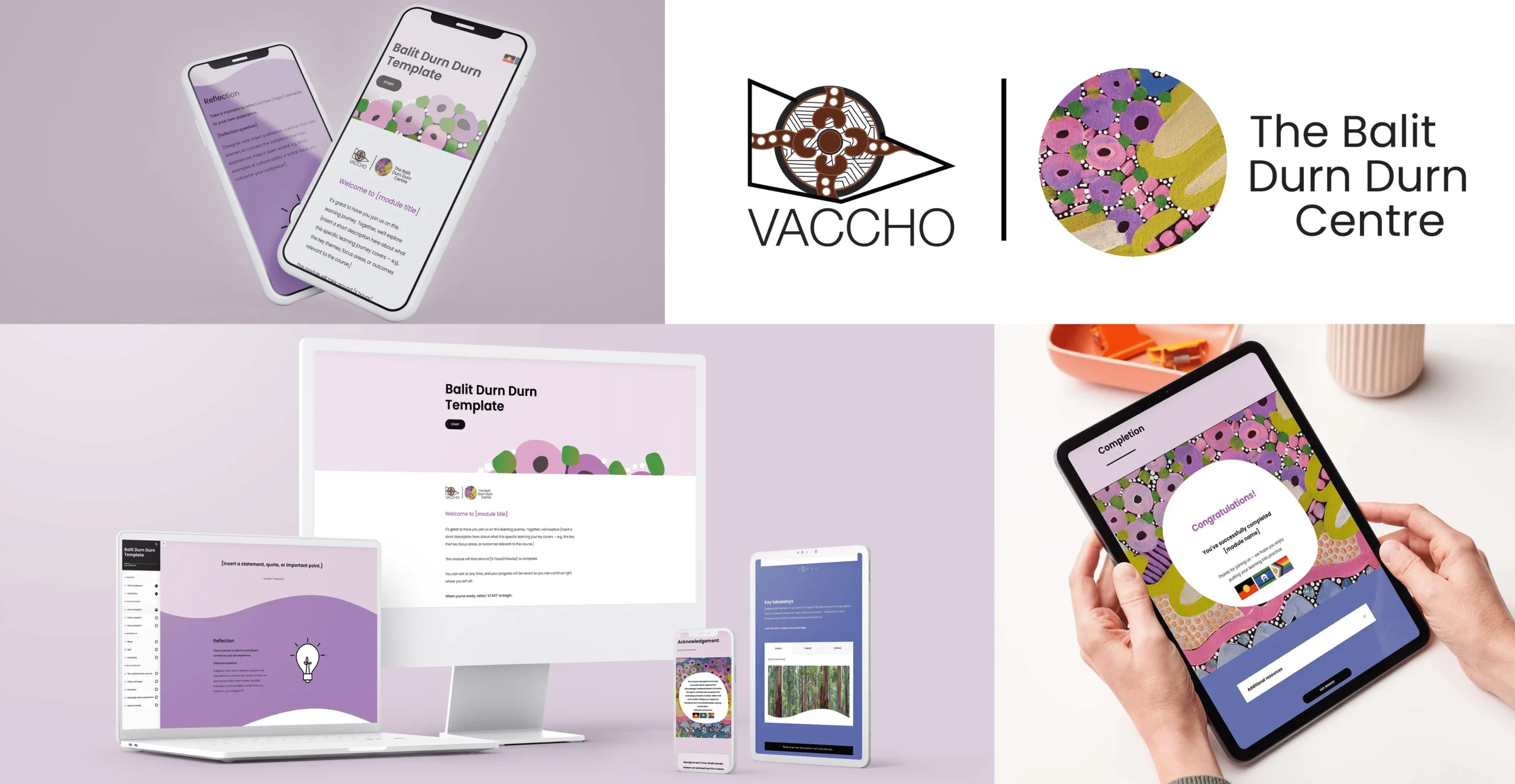
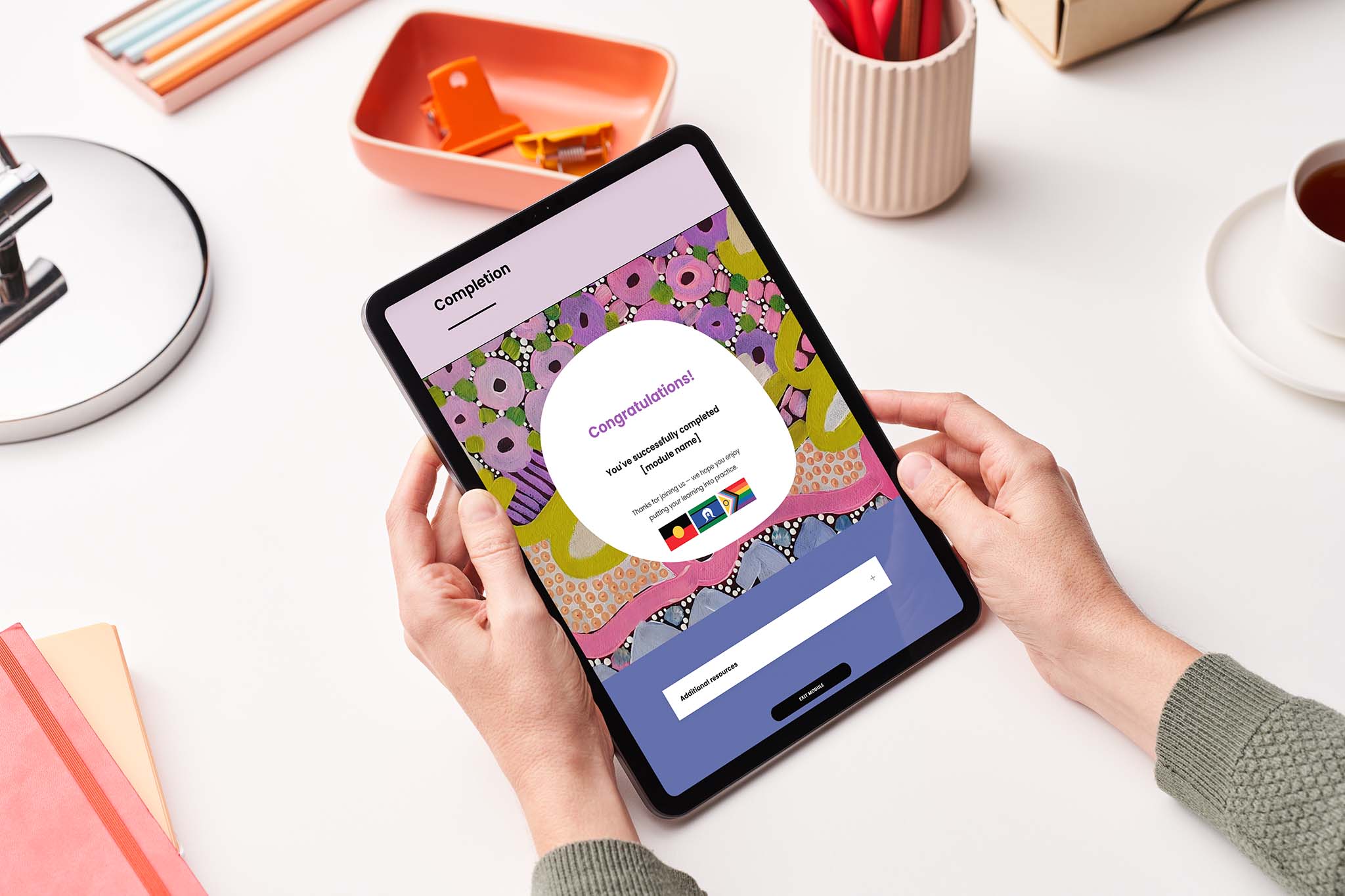
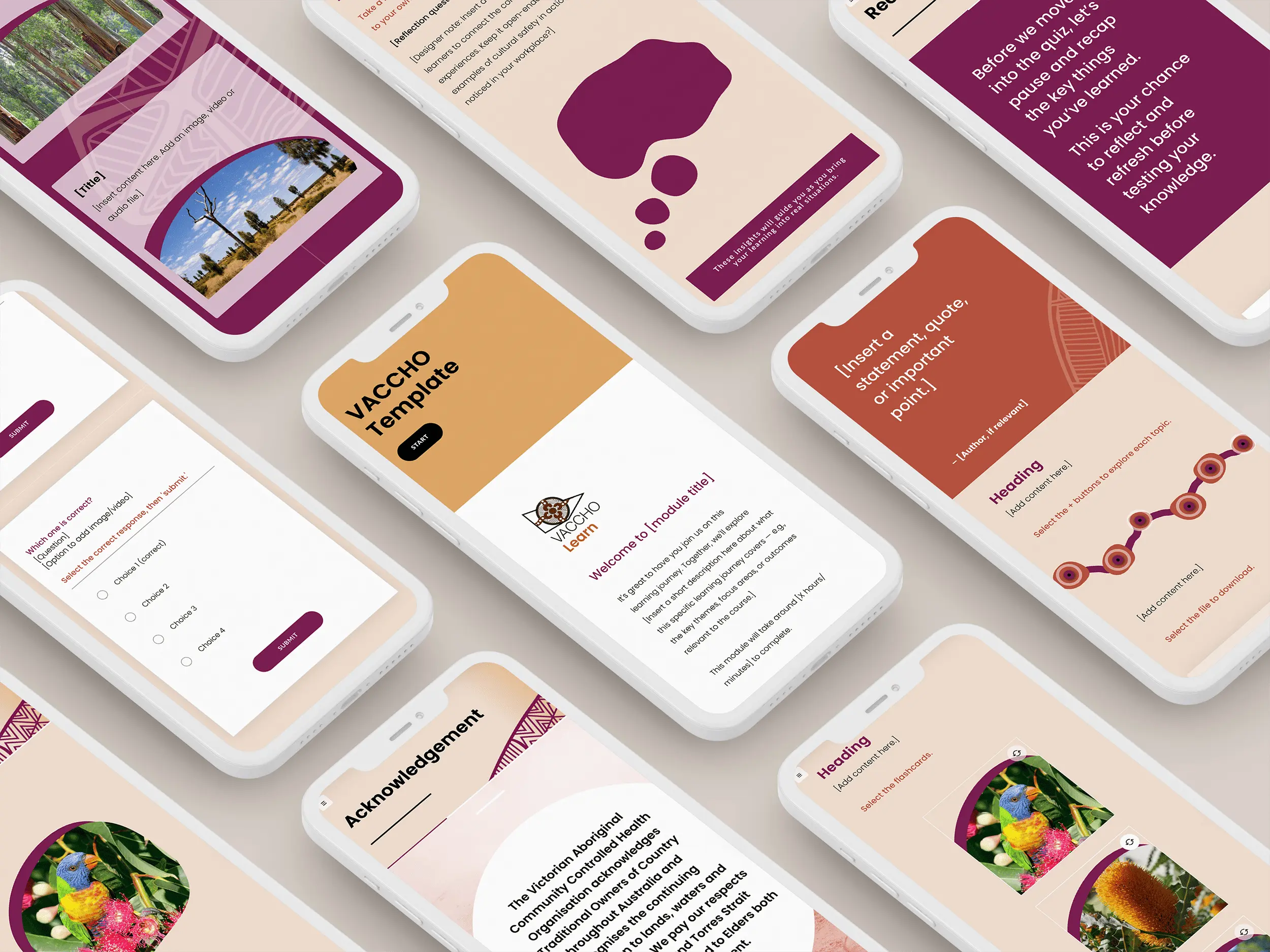
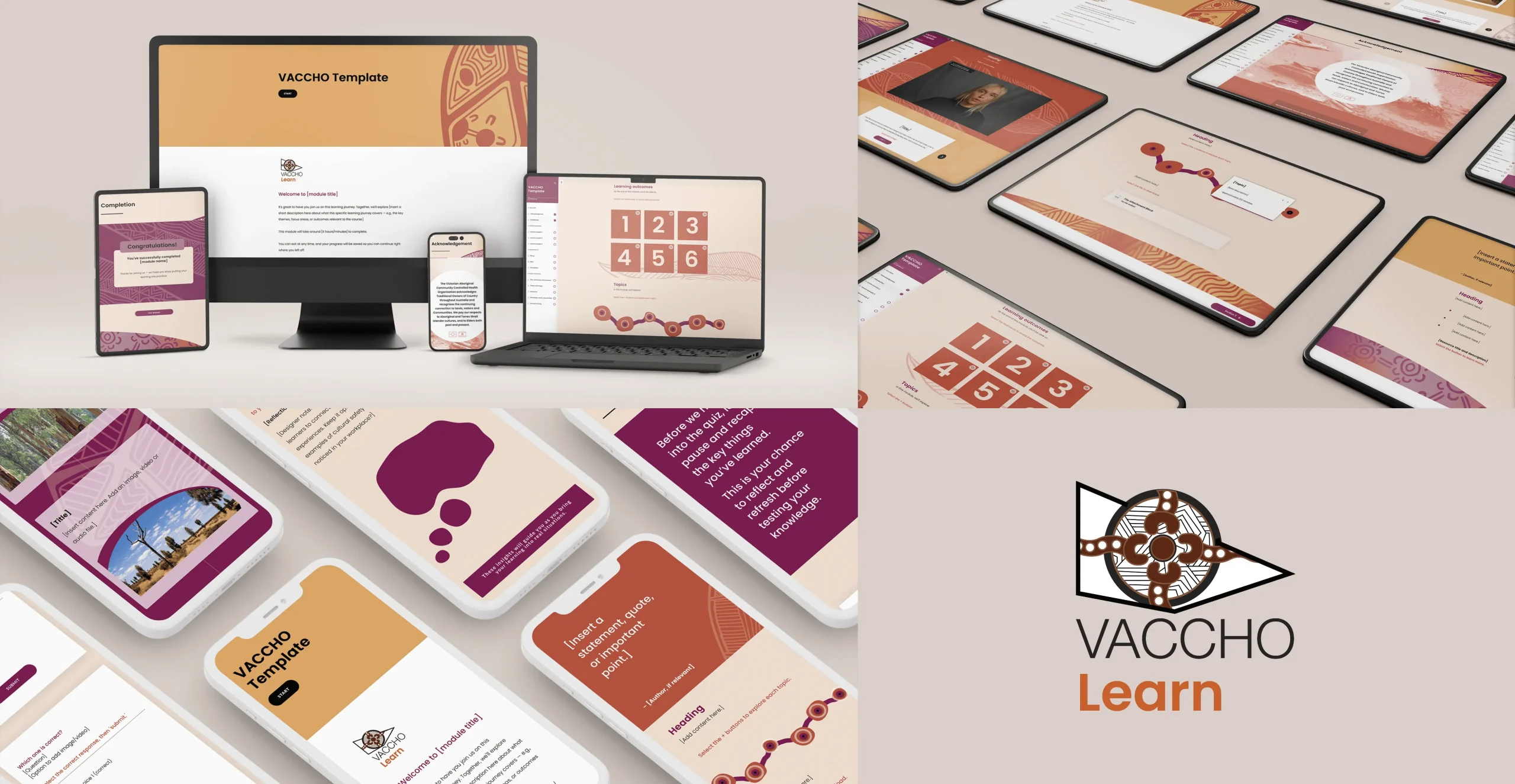
Branded templates, Rise 360 and Storyline 360 We built a full suite of block templates in Articulate Rise 360 and Storyline 360, styled to the distinct branding of both VACCHO and the Balit Durn Durn Centre. Templates cover the full range of development needs, cover pages, content blocks, knowledge checks, reflection activities, content warnings, and support services blocks, with holding text and images ready to swap out.
Custom asset design tool We built a bespoke PowerPoint-based asset design tool: a library of branded, editable graphic elements developers can use to create custom flashcards, image frames, and diagrams that look on-brand every time, regardless of design background.
eLearning development guide To tie the system together, we developed a practical guide covering tone of voice, visual consistency, accessibility (WCAG AA standards), knowledge check design, learner-centred principles, and culturally respectful design, including how to represent communities authentically and avoid tokenism.
The outcome
VACCHO and the Balit Durn Durn Centre now have a complete, self-sufficient eLearning design system built around their brands, their values, and their people. Internal developers can produce polished, culturally safe, accessible learning without reinventing the wheel, and without the risk of cultural safety principles being lost in translation.
For an organisation whose mission is to improve the health and wellbeing of Aboriginal and Torres Strait Islander communities across Victoria, the quality and cultural safety of every piece of learning it produces matters deeply. This work helps VACCHO and the Balit Durn Durn Centre build that capability at scale, with confidence, and on their own terms.
Area
Aboriginal health; Social and emotional wellbeing; Workforce development
Tools
Articulate Rise 360, Articulate Storyline 360, Adobe Creative Suite, PowerPoint
Delivery Method
Self-paced eLearning (internal workforce development)
Deliverables
Articulate Rise 360 block templates; Articulate Storyline 360 templates; Branded asset design tool; eLearning development guide