
Learning Design case studies: how we transformed L&D programs
ID case studies: how we transformed L&D programs
When learning programs fall flat, it’s rarely about the content itself. More often, it’s because the design doesn’t connect. We all know how this can look: learners get lost in theory, discouraged with clunky delivery, or confused about how to apply what they’ve learnt.
We’ve worked with some incredible organisations to reshape their L&D programs. Here are some of our favourite instructional design case studies. Keep reading to see how our forward thinking partners are creating learning experiences that shift behaviour, build confidence, and deliver measurable results.
Why most L&D programs miss the mark
Plenty of organisations invest in training that looks good on paper but falls short in practice. Programs often share the same problems:
- Low completion rates: learners drop out when the content feels irrelevant or overwhelming
- Generic design: cookie-cutter modules don’t reflect the realities of different roles, industries, or contexts
- Weak impact: participants may pass the quiz, but can’t apply the learning on the job
This is why we’re always banging on about instructional design in L&D programs. Good design makes learning relevant, engaging, and practical. But it also gives people tools they can use straight away and embeds behaviours that last.

How South32 turned capable managers into confident, connected leaders
South32 is a global mining and metals company with strong technical expertise across its workforce. But when it came to leadership, their mid-level managers needed more than operational know-how.
The challenge: Equip mid-level leaders to lead people—not just projects
Technically skilled managers were moving into leadership roles without the coaching, communication, and connection skills required to bring out the best in their teams. So South32 wanted a program that could create leadership behaviours and that could scale across regions.
The solution: A practical, people-focused learning journey that made leadership feel natural
A co-designed leadership journey for mid-level managers. This includes:
- Three flagship workshops
- Virtual learning circles for peer connection across sites and time zones
- Guided coaching conversations to reinforce growth on the job
- Assets to support sustained practice: activity cards, facilitator guides, and a reflection journal
The result: From good managers to grounded, connected leaders
Feedback was so strong that South32 is now rolling out the program across regions. This will work toward creating a consistent leadership culture across the organisation. What started as a local initiative has grown into a global leadership ecosystem—one that’s shaping the next generation of high-impact leaders.
Read the full case study here
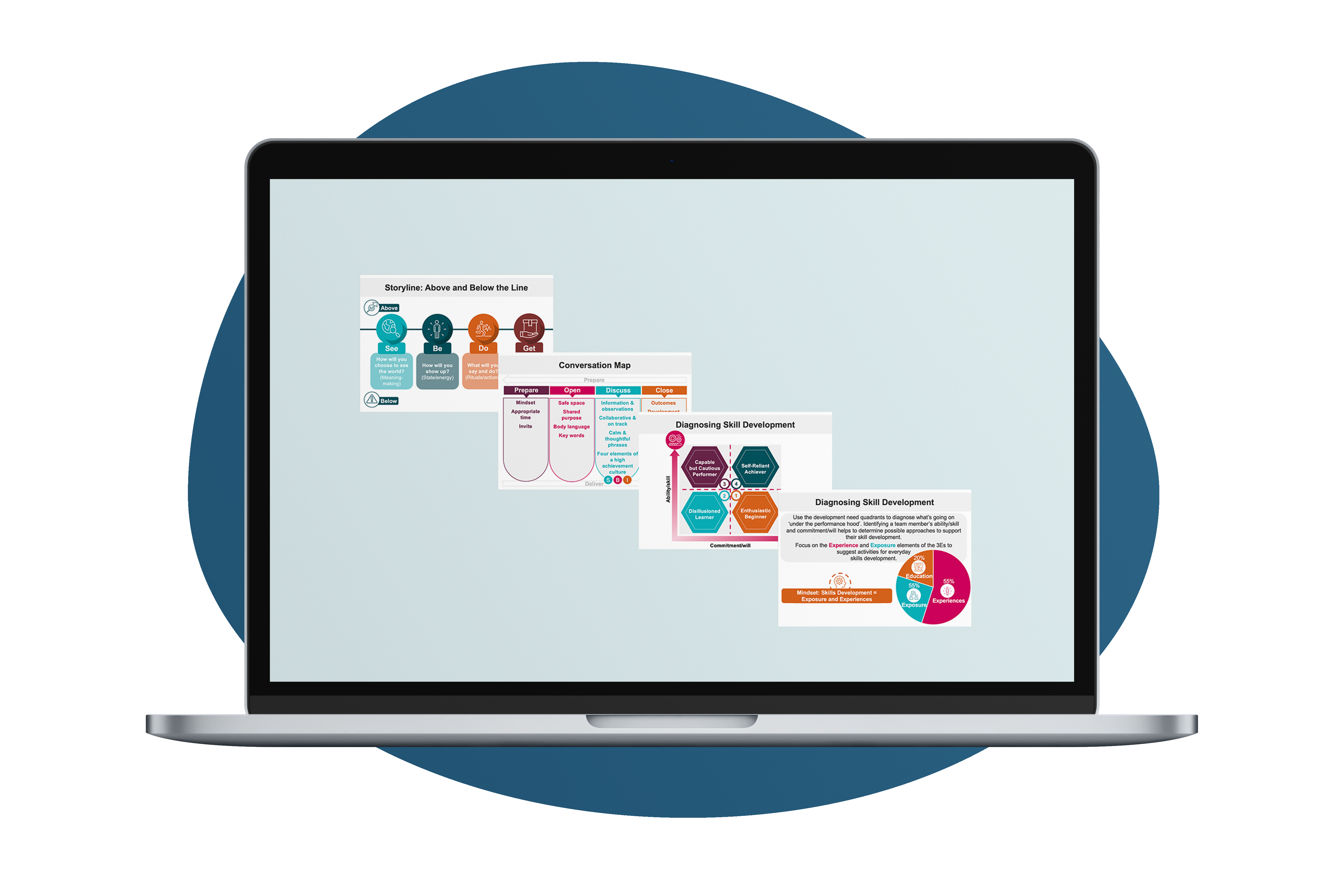
Building a leadership culture at MLC Life Insurance
MLC Life Insurance (now Acenda) wanted to build a culture that would sustain leadership growth for years to come. So they needed to help emerging leaders shift from simply doing great work to leading great work.
The challenge: Help emerging leaders shift from doing to leading
First-time leaders at MLC were high achievers, but leadership requires more than technical excellence. The organisation needed a program that would develop new mindsets as well as skills, and that would reinforce its four leadership pillars: Align, Engage, Enable, and Build Capability.
The solution: A practical, multi-touchpoint journey that embedded leadership behaviours
We worked with MLC to design a leadership ecosystem that connected learning directly to work:
- Interactive workshops to explore, practise, and challenge ideas
- Case study videos (with a touch of humour) to model leadership in action
- Peer partnerships and experiments to keep momentum high
- A toolkit of concept cards and “survival kit” resources for on-the-job support
- Real-world challenges to make learning practical
The result: From achievers to confident, connected leaders
The program sparked a cultural shift: emerging leaders began to apply new behaviours in real time, supported by shared tools and language across the business. What started as a development initiative is now a scalable leadership program, grounded in strategy and behavioural change
Button: Read the full case study here
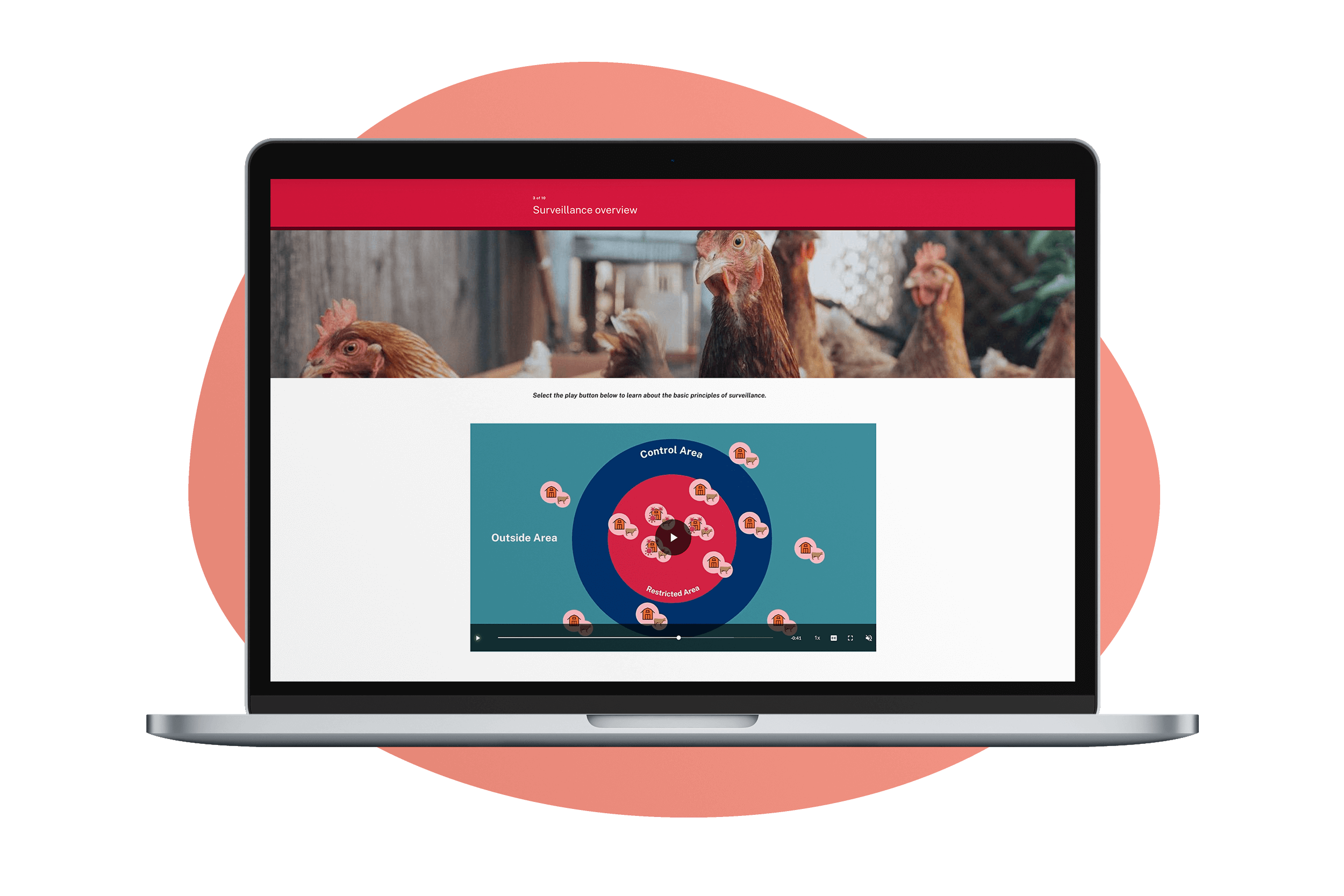
Making compliance engaging at NSW DPI
The NSW Department of Primary Industries (DPI) manages everything from biosecurity to food safety and emergency response. With such high stakes, their compliance training couldn’t afford to be ignored. But compliance training can be dull as dishwater.
The challenge: Turn complex compliance into learning people actually want to finish
DPI needed training that was technically accurate and aligned with strict WCAG 2.2 accessibility standards, but also clear and engaging enough for busy learners. They wanted modules that were accurate, fully accessible, and engaging enough that learners would want to complete them.
The solution: From static slides to dynamic, accessible digital learning
Together we designed a suite of eLearning modules that blended clarity, creativity, and compliance:
- Custom intro videos to set the scene
- Interactive quizzes with feedback to reinforce knowledge
- Real-world case studies to connect content with practice
- Clear visuals to explain complex concepts
- Fully accessible design meeting WCAG 2.2 standards
The result: Consistent, engaging compliance training learners embraced
Even before the first modules were complete, DPI requested four more—the design was landing. Staff found the modules easy to use, engaging to complete, and consistent across topics.
The suite now delivers clear, accessible, enjoyable compliance training. This supports safer practices, stronger emergency responses, and a more capable workforce across NSW.
Read the full case study here.

Equipping teachers to support every learner with Autism CRC
Autism CRC’s inclusionED initiative helps educators apply evidence-based strategies to support neurodivergent learners. They needed an engaging, accessible way to put research into practice in classrooms across Australia.
The challenge: Turn Autism research into practical tools for teachers
inclusionED had a powerful toolkit of strategies for supporting Autistic students. But the resources weren’t reaching teachers. They needed to deliver content that was engaging, intuitive, and immediately applicable—for new and experienced educators, across K–12 and early childhood.
The solution: Accessible eLearning that made inclusive practice feel doable
We partnered with Autism CRC to design 21 modules across two eLearning suites. Built in Rise 360 and fully WCAG 2.2 compliant, they are grounded in both research and real-world teaching. Key features included:
- Case study videos modelling inclusive classroom practice
- Reflection activities linking theory with personal experience
- Knowledge checks to build confidence
- Intuitive design that respected teachers’ time and expertise
The result: From research to real classroom impact
Educators report feeling more capable, confident, and ready to support neurodivergent learners. By turning research into action, these modules help teachers create classrooms where every child feels included—and where inclusive practice becomes second nature.
Read the full case study here
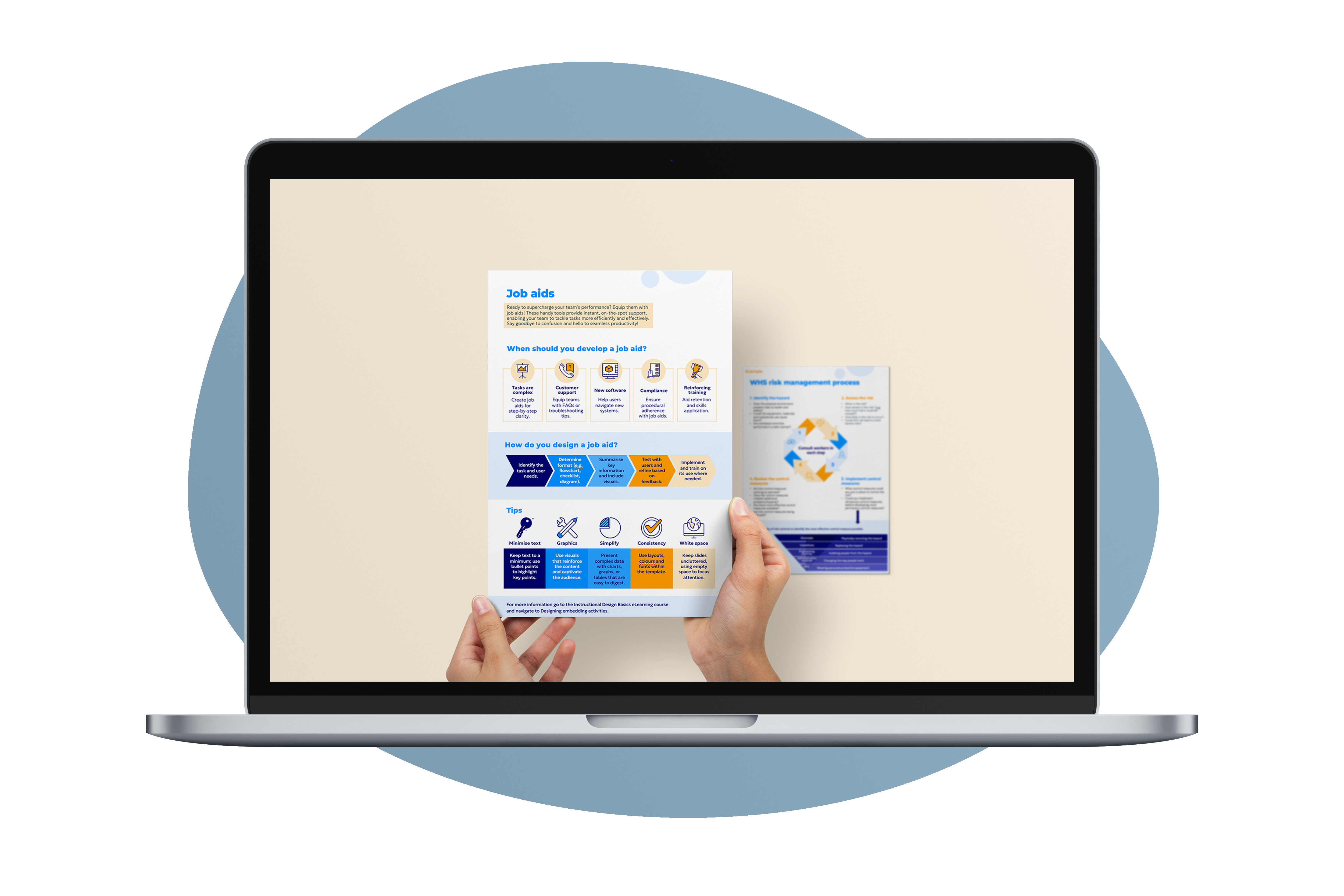
Building lasting capability at CHIA Vic
Community Housing Industry Association Victoria (CHIA Vic) is the peak body for not-for-profit community housing. With training programs already in place, they wanted to improve quality and engagement. Most importantly, they needed to build the capability to sustain the improvements over time.
The challenge: Turn housing sector know-how into engaging, sustainable learning
CHIA Vic’s existing training covered essential knowledge but lacked consistency and impact. They wanted to raise the standard across their programs, while also equipping their facilitators with the skills and tools to keep improving training in-house.
The solution: A collaborative redesign and a toolkit for the future
We started by reviewing and refreshing four of CHIA Vic’s existing courses, restructuring content for clarity and learner engagement. Alongside this, we co-designed a tailored instructional design course for their facilitators. To make the change sustainable, we provided:
- A toolkit of ready-to-use templates, guides, and resources
- Visual mock-ups to test and refine improvements collaboratively
- An immersive handover session to embed new skills and confidence
The result: Confident facilitators and future-focused programs
CHIA Vic now delivers training with more clarity, structure, and purpose. Not only that, their team has the skills to refine and improve programs independently. By investing in internal capability, they’ve built a foundation for sustainable learning design that will support the sector for years to come.
Read the full case study here.
Instructional design by the numbers
The impact of good instructional design is measurable. This table shows how thoughtfully designed programs compare with typical training across completion, ROI, accessibility, and scalability.
| Metric | Standard training results | With instructional design | Key evidence |
| eLearning completion rates | 15-30% | 70-80% | A study of 221 online courses found completion rates as low as 0.7%—but well-designed shorter courses hit over 50% |
| Leadership program ROI | Limited behaviour change | $4-7 return for every dollar invested | Research tracking leadership programs found some delivered $5.8M in value while others lost $460K |
| Accessibility compliance | Inconsistent compliance | 100% WCAG 2.2 compliant | Only 35% of organisations feel confident about their digital accessibility. But WCAG outlines how to get it right |
| Program scalability | High cost for each rollout | 40-50% cost reduction vs. traditional training | Well-designed programs create scalable learning that builds lasting capability |
How to spot a strong L&D partner
Training providers are not created equal. A strong instructional design partner will:
- Co-design with your people: for programs shaped around your context
- Provide practical tools: to embed learning into daily work in a lasting way
- Build for scale: so solutions grow across teams, regions, and time
- Measure outcomes: to track behaviour change and business impact
- Design for everyone: accessible and inclusive for full engagement
- Boost capability: for stronger, self-reliant organisations
At Instructional Design Australia, these principles define how we work.
Since 2009, we’ve partnered with government, healthcare, education, and corporate organisations across Australia. Our programs are built to last, designed to scale, and proven to strengthen internal teams.
FAQ
What is an instructional design case study?
An instructional design case study is a real-world example showing how learning design improved organisational outcomes. It highlights the challenge, solution, and results — turning abstract ideas into concrete L&D success stories.
How do case studies help in choosing an L&D partner?
Instructional design case studies give you evidence of a provider’s approach and impact. By reviewing corporate learning case examples, you can see whether their methods align with your culture, priorities, and goals.
How long does it take to transform an L&D program with instructional design?
Most projects take 8–12 weeks, depending on complexity and scale. Case studies show that even in this timeframe, organisations see significant improvements in learner confidence, program uptake, and results.
Shape your next L&D success story
Your people deserve learning that is practical, engaging, and designed to last. And your business deserves learning that drives results. We’ll work with you to co-design training that builds capability, strengthens culture, and delivers measurable business outcomes.
Book a consultation with us and let’s create an L&D program that helps your people and your organisation thrive.